
From Indoor Air to Environmental Risk: HKU Environmental Sciences Research in the Global Spotlight
— by Rebecca Tam
Environmental sciences research speaks directly to public concerns, from indoor air quality to climate and biodiversity risks. This post examines 3,091 HKU-affiliated environmental sciences outputs published between 2020 and 2024, indexed in SciVal and tracked by Altmetric Explorer. Data were retrieved on 30 April 2026.
At a glance
- Scope: 3,091 HKU-affiliated environmental sciences outputs from 2020–2024
- Reach: 1,882 outputs received attention, representing 60.9% of the total
- Media: 3,453 news stories from 1,196 outlets across 65 countries
- Policy: 271 policy mentions from 65 sources across 23 countries
- Main driver: COVID-19 studies on airborne transmission, ventilation, and indoor risk
What caught the world’s attention
COVID-19-related studies on airborne transmission, ventilation, and indoor risk drew the most attention. Broader environmental topics, including sea-level rise, marine fish range shifts, and biodiversity conservation, also appeared among the publications with highest Altmetric Attention Scores.
Studies with direct relevance to public health guidance, indoor air quality, and environmental decision-making attracted the strongest attention.
When attention peaked
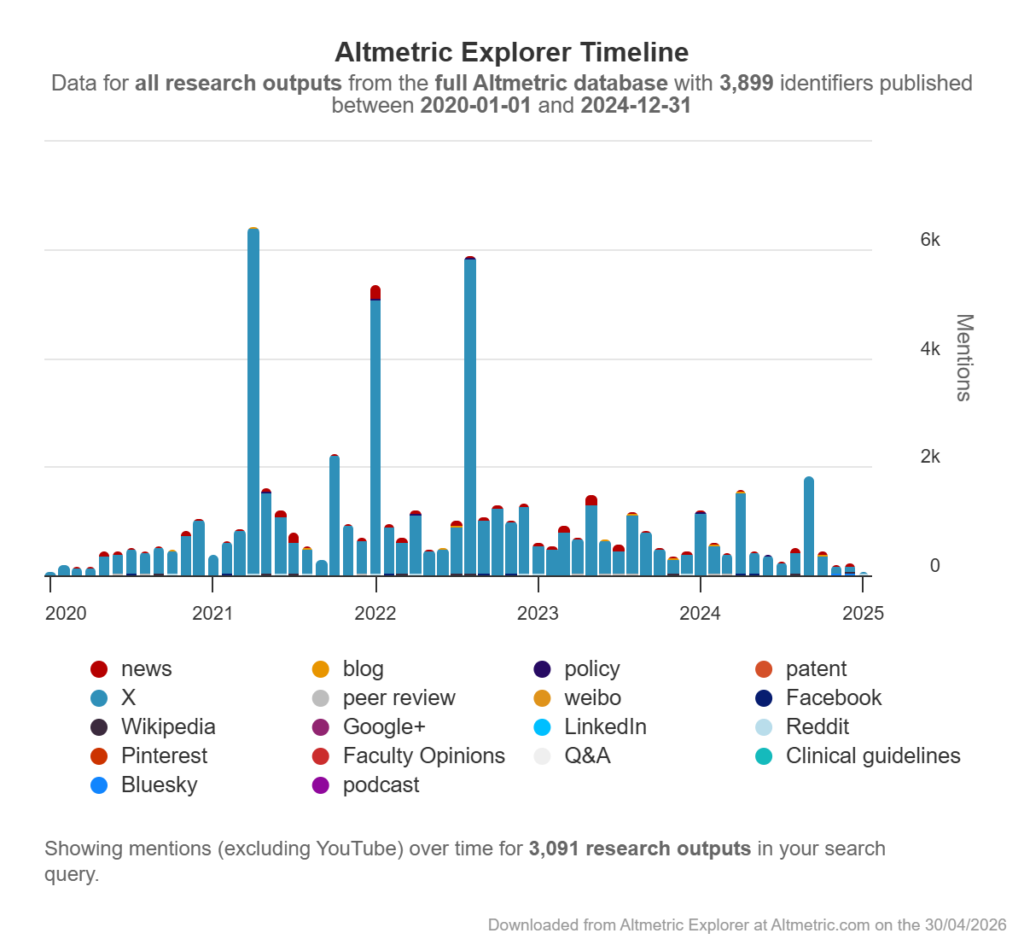
Attention peaked in April 2021, January 2022, and August 2022, mainly around COVID-19 airborne transmission, ventilation, indoor risk assessment, and debate over delayed recognition of airborne spread.
In the news
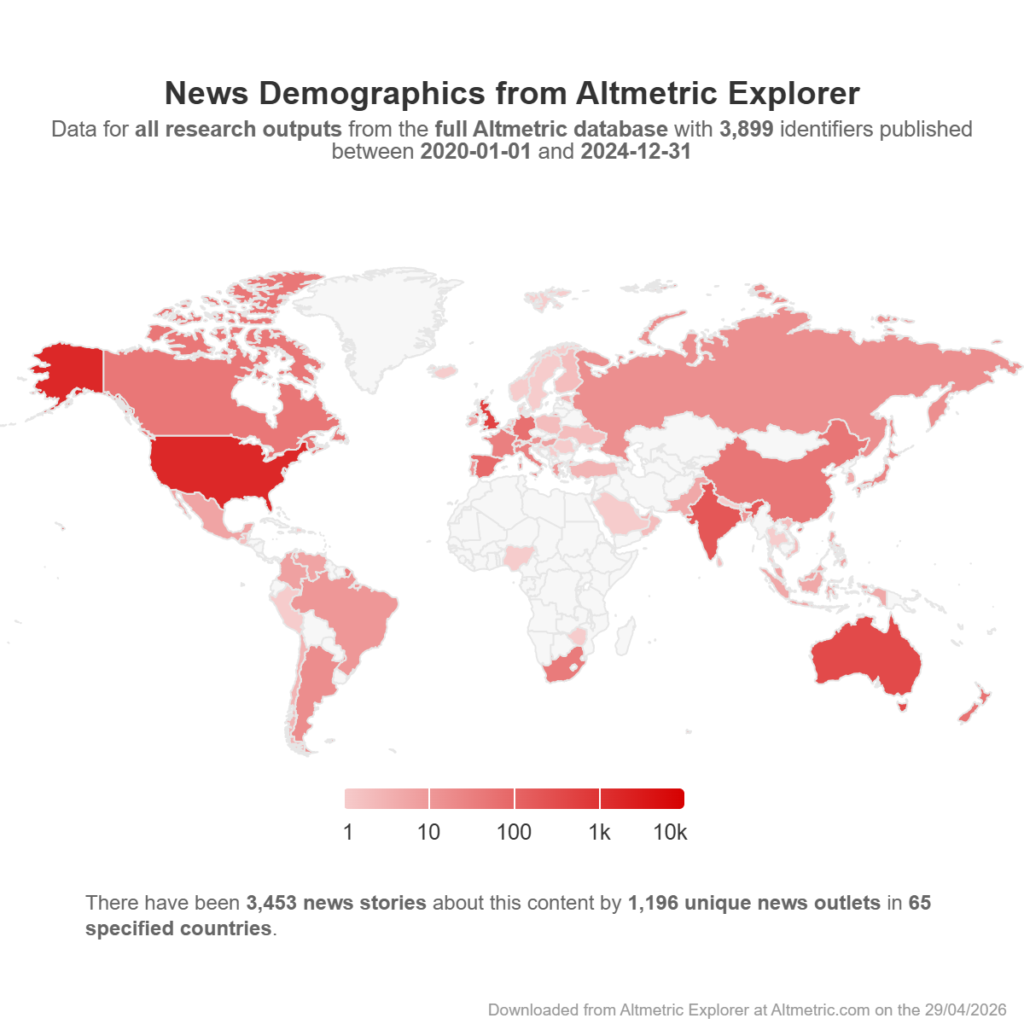
HKU environmental sciences research generated 3,453 news stories from 1,196 outlets across 65 countries. Coverage was highest in the United States, followed by the United Kingdom, Australia, India, and Spain.
In policy documents
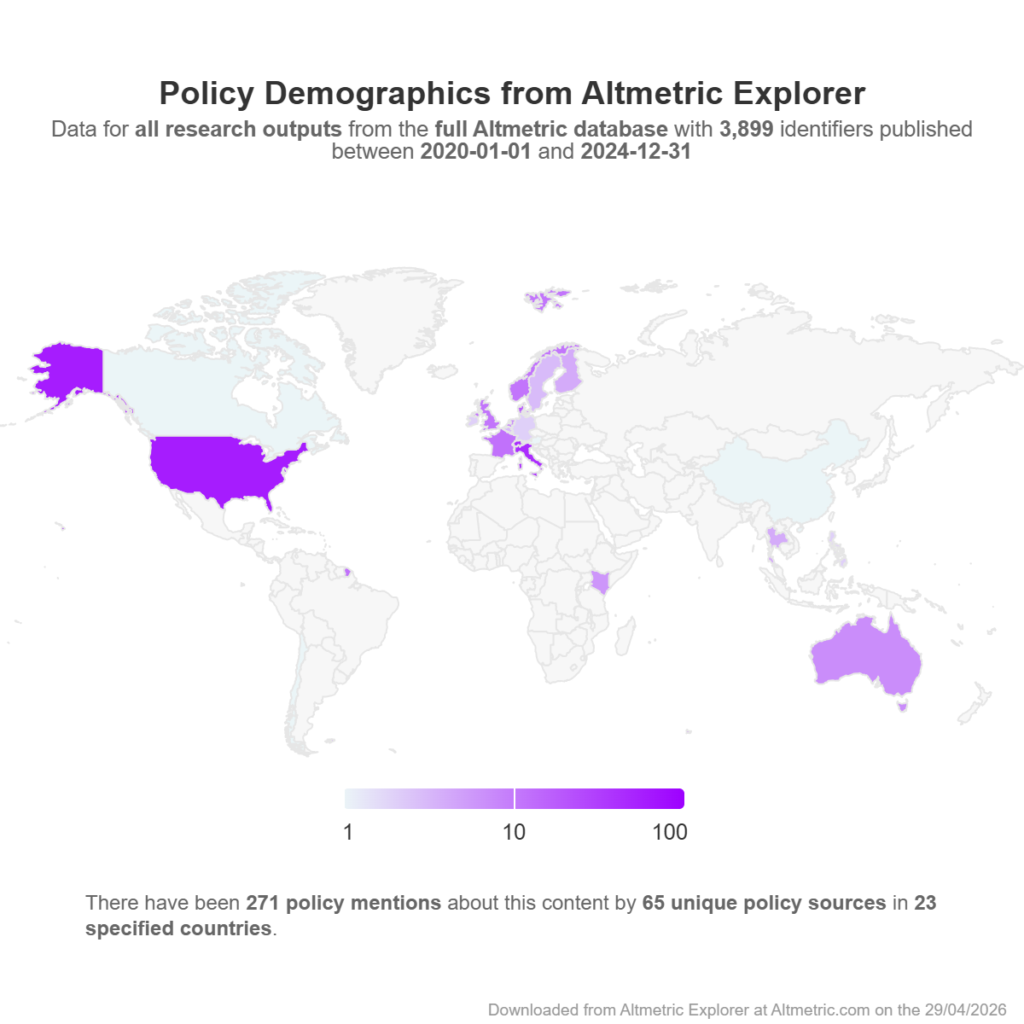
The research recorded 271 policy mentions from 65 sources across 23 countries. The United States had the highest number of policy mentions, followed by Italy, Switzerland, and Luxembourg. Major citing bodies included the Food and Agriculture Organization of the United Nations, the Publications Office of the European Union, World Health Organization, World Bank, and Centers for Disease Control and Prevention.
| Policy Issuing Body | Count of Policy Mentions |
| Food and Agriculture Organization of the United Nations | 43 |
| The Publications Office of the European Union | 27 |
| World Health Organization (WHO) | 21 |
| World Bank | 20 |
| Centers for Disease Control and Prevention (CDC) | 18 |
| International Council for the Exploration of the Sea (ICES) | 11 |
| World Meteorological Organization (WMO) | 10 |
| International Union for Conservation of Nature (IUCN) | 8 |
| Organisation for Economic Co-operation and Development (OECD) | 7 |
| National Bureau of Economic Research | 6 |
Limitations
This analysis is a snapshot based on data retrieved on 30 April 2026. Later attention is not included. Results also depend on SciVal indexing and Altmetric Explorer tracking. The Altmetric Attention Score reflects volume and source weighting of online attention, not research quality, sentiment, consensus, or real-world impact.
Dashboard
A dashboard of the results can be found at: https://www.altmetric.com/explorer/report/cf37d0bd-4781-4f25-bc07-6dd851b791e5
The dashboard is updated automatically; therefore, the results may differ from this snapshot.
Bottom line
HKU’s environmental sciences research from 2020–2024 reached well beyond academic publishing. COVID-19 studies on airborne transmission, ventilation, and indoor risk drove the strongest attention, while work on sea-level rise, marine ecosystems, and biodiversity also gained visibility. The findings show how timely environmental research can enter public debate, inform policy, and travel globally.
Extended Readings
- How HKU’s Geography Research Trended Online (2020–2024): Attention, Reach and Policy Influence
- How HKU Medical Research Travelled the World: Attention, Policy Uptake, and Clinical Practice
- Presenting Research Impact: Metrics, Misuse, and Movement
Declaration of Generative AI Use
I acknowledge using generative AI tools in writing this post. I used:
- GPT-5.5 to summarize previous literature and refine the language, and
- Copilot to generate the blog banner image.
I declare that I reviewed and edited the contents as needed, and take full responsibility for the content of the post; And the information provided is complete and accurate.