
How HKU’s Geography Research Trended Online (2020–2024): Attention, Reach and Policy Influence
— by Kitman Chan
We wanted to look beyond traditional metrics to understand the real-world footprint of HKU’s geographical research. In today’s digitally connected world, the academic conversation happens everywhere: on social media, in news headlines, and even in policy rooms from Geneva to Washington. By using Altmetric Explorer and SciVal, we analyzed 1,064 HKU-affiliated geography outputs from 2020 –2024. Below is a summary of our findings, captured in a snapshot from 9 February 2026.
🧠 At a glance
- Scope: A total of 1,064 HKU’s geography research outputs (2020–2024) were indexed in SciVal; 765 of those were tracked by Altmetric Explorer.
- Reach: Among the 1,064 research outputs, roughly 37% of outputs received measurable online attention.
- Key channels: social media (X) was the dominant source of mentions.
- Major drivers: COVID-19 research—especially papers about airborne transmission and ventilation—generated the largest spikes in attention.
🌍 What stood out
On X
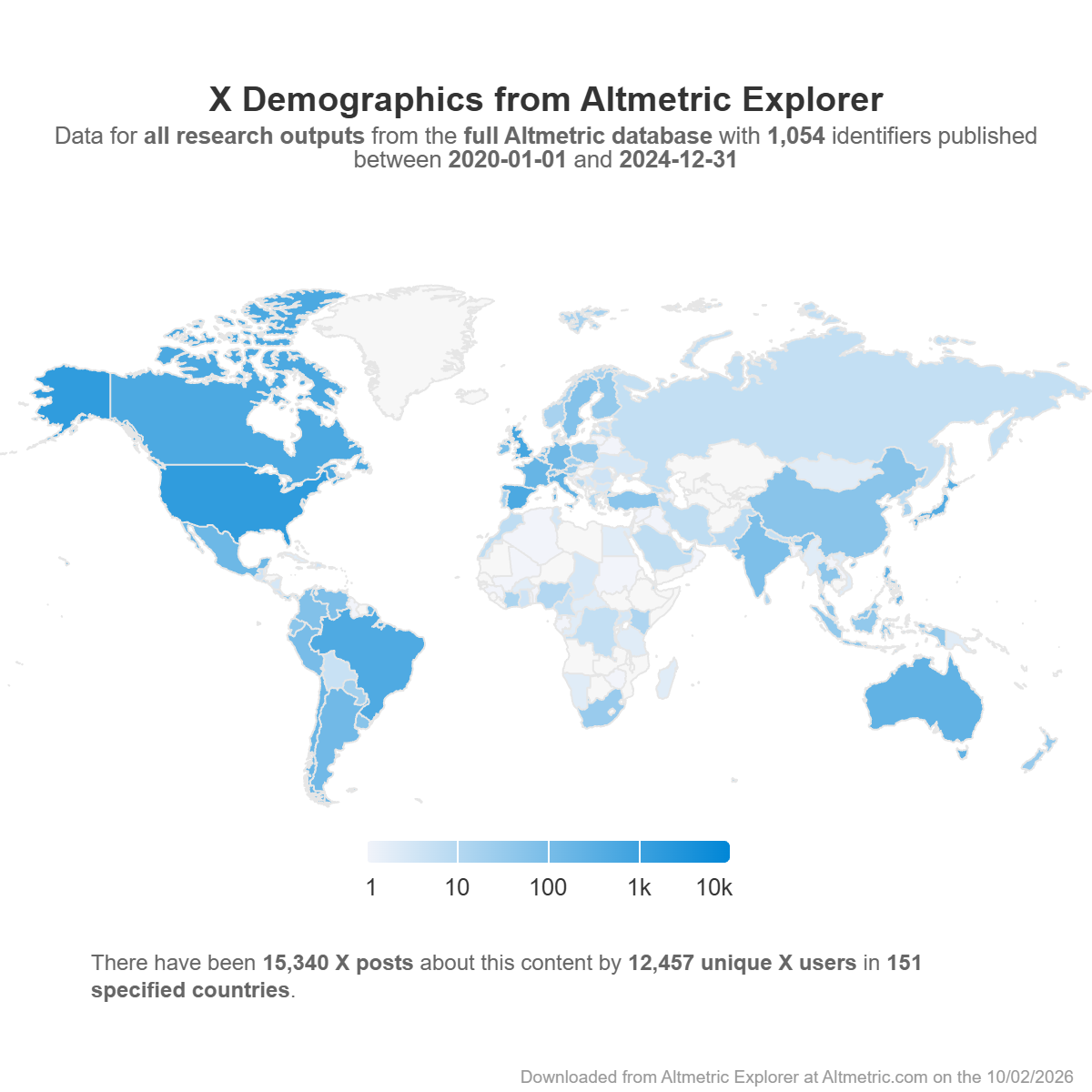
- There were 15,340 posts on X (formerly Twitter) by 12,457 unique users across 151 specified countries including the U.S., U.K., Canada, Spain, and Brazil.
In the News
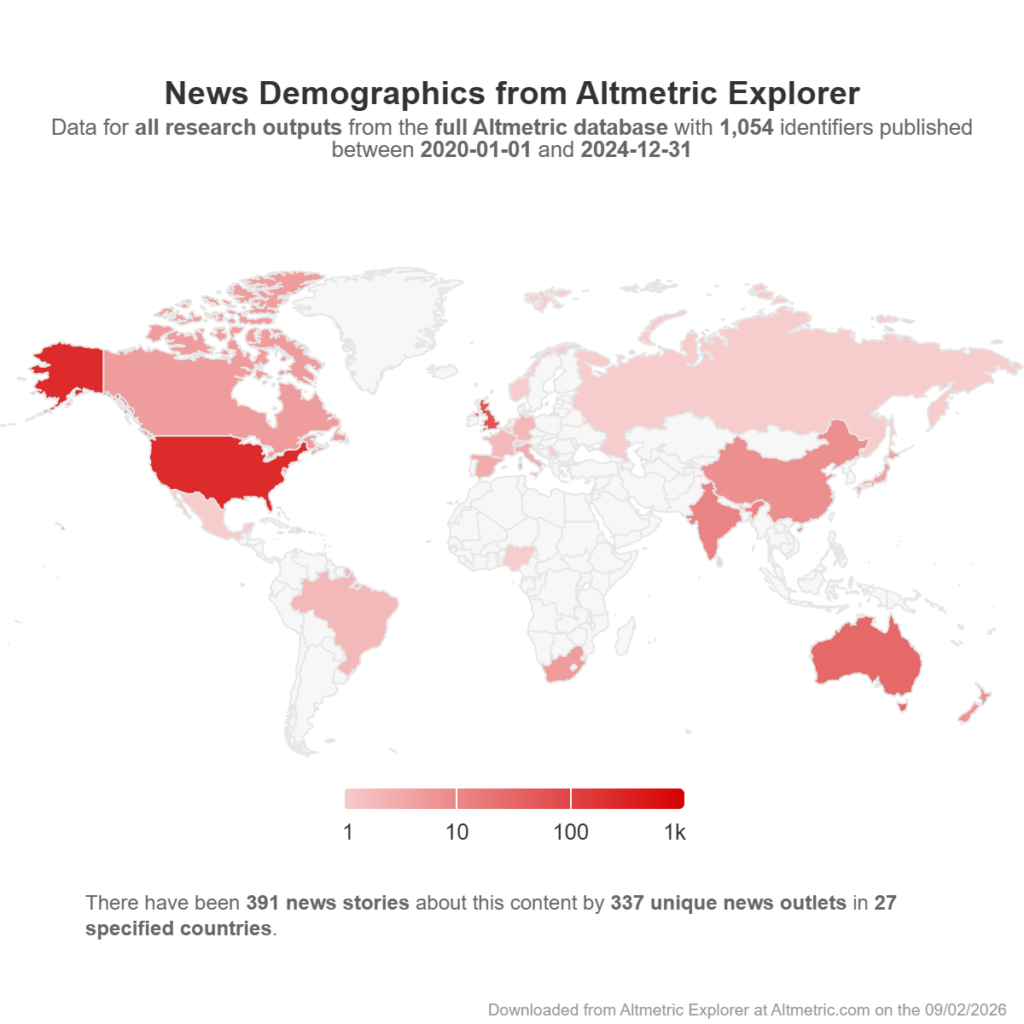
- There were 391 news stories from 337 unique outlets across 27 countries.
- U.S. outlets drove nearly 60% of coverage, followed by the U.K., Australia, and India.
- Long-tail reach included smaller outlets from Sri Lanka to Serbia, showing wide international reach.
In Policy Documents
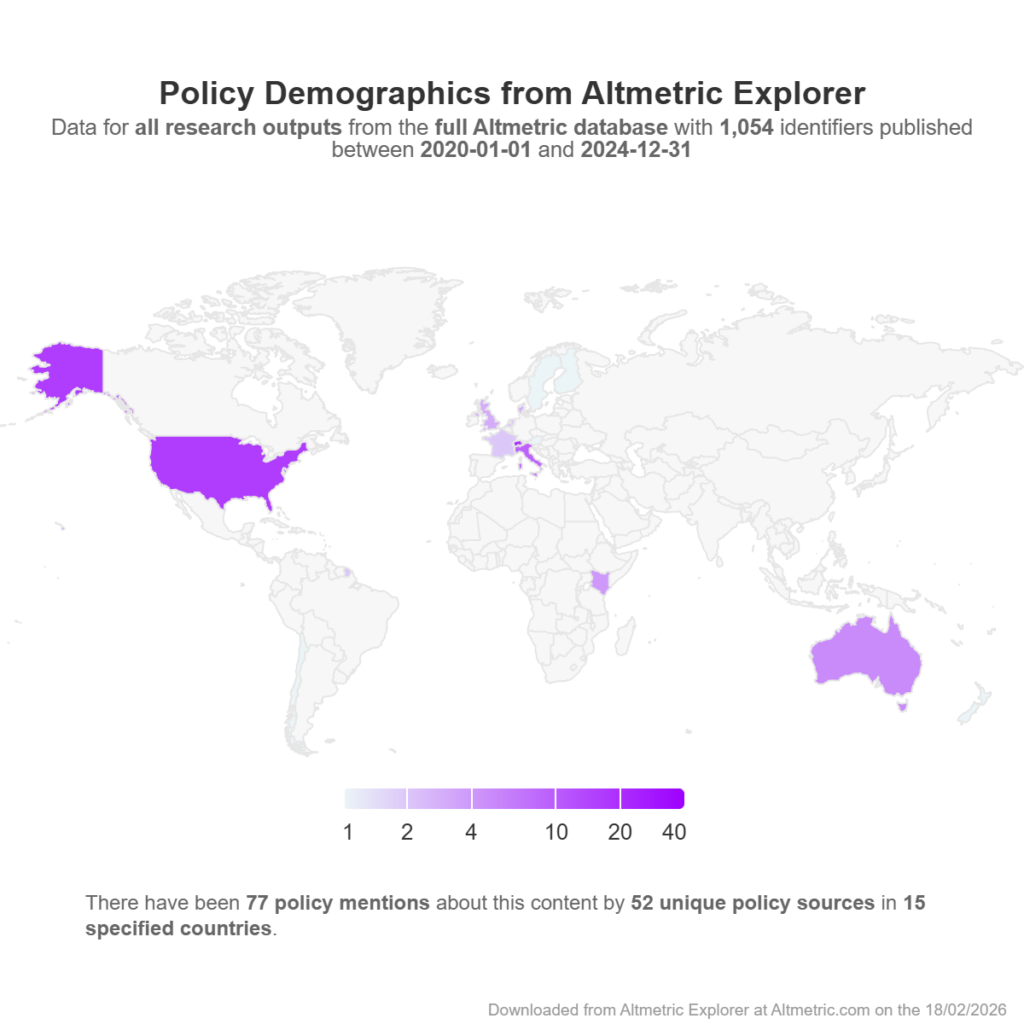
- There were 77 mentions across 52 policy sources in 15 countries; Institutions based in Switzerland and the United States accounted for the largest share of policy citations.
- Top-citing organizations included multilateral bodies such as World Health Organization (WHO), World Meteorological Organization (WMO), Food and Agriculture Organization of the United Nations (FAO) and World Bank.
📈 Attention Over Time
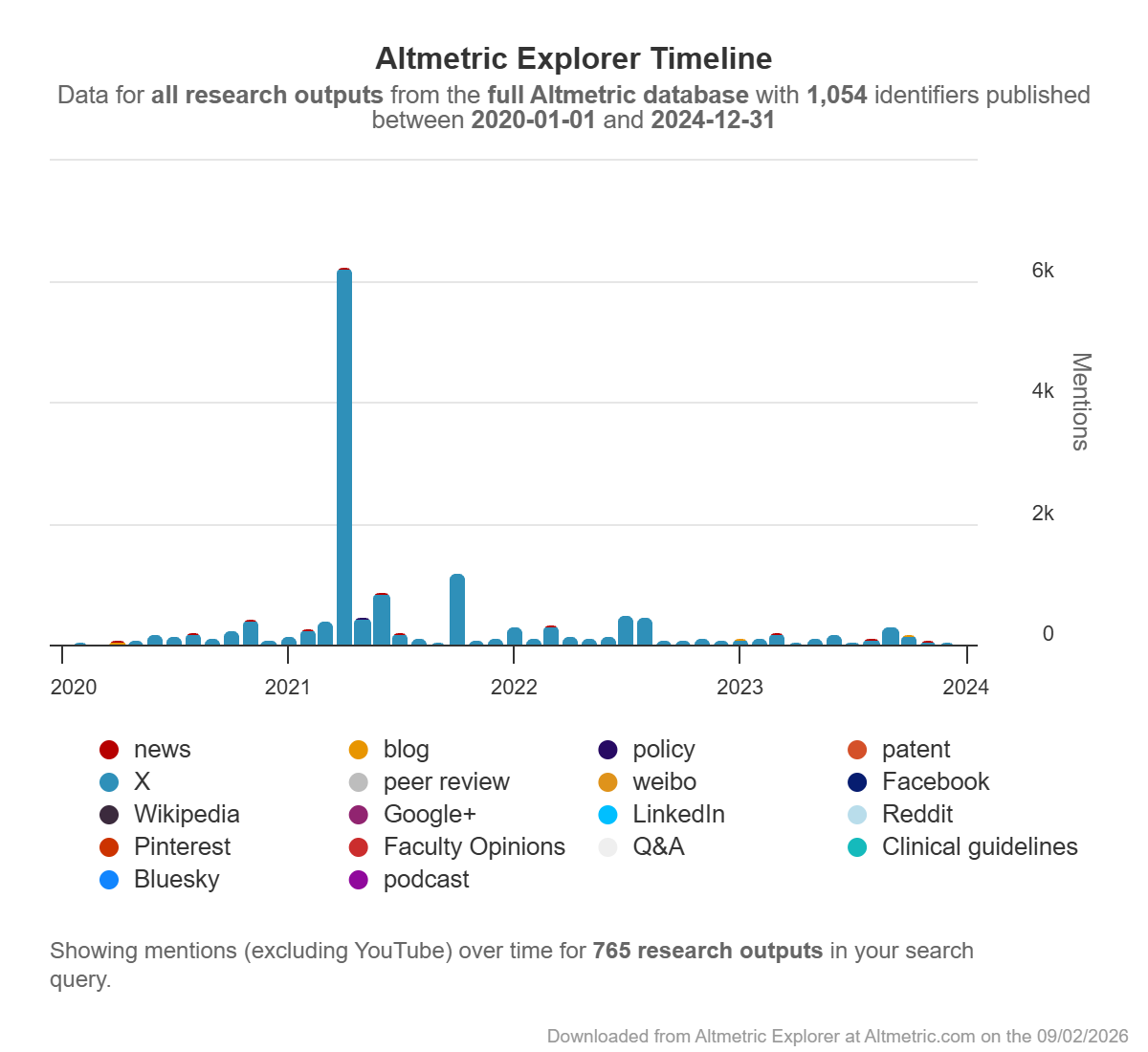
- Clear spikes in attention occurred in March 2021 and October 2021, with COVID‑19 topics dominating during those peaks.
🏆 Top Attention-Grabbing Research
Top-performing outputs are ranked by Altmetric Attention Score. Papers with immediate public-health relevance drew the most attention. The five highest-scoring items are:
| Title | Publication Year |
Altmetric Attention Score (Data retrieved on 9 February 2026) |
|
|---|---|---|---|
|
|
Probable airborne transmission of SARS‑CoV‑2 in a poorly ventilated restaurant | 2021 | 3131 |
|
|
Short‑range airborne route dominates exposure of respiratory infection during close contact | 2020 | 1887 |
|
|
Insufficient ventilation led to a probable long‑range airborne transmission of SARS‑CoV‑2 on two buses | 2021 | 555 |
|
|
Doubling of annual forest carbon loss over the tropics during the early twenty‑first century | 2022 | 473 |
|
|
Impact of pesticide use on wild bee distributions across the United States | 2024 | 412 |
Other highly noticed research covered topics from forest carbon loss and pesticide impacts on pollinators to urban transmission patterns in Hong Kong and sea-level threats to small island states. In general, outputs with clear public-health or environmental policy implications attracted the largest online audiences.
📌 Implications
- HKU’s geography research is discussed from North America to Asia, in both public and policy spheres. Between 2020 and 2024, it achieved notable global attention, resonating with the public, media, and policymakers worldwide.
- The broad geographical spread of engagement and meaningful policy citations with multilateral bodies underscore HKU’s contribution to global scientific dialogue and demonstrate a clear pathway from academic insight to policy impact.
- Attention is event-driven. A few high-profile papers—especially those tied to COVID-19 transmission and indoor ventilation—dominated the metrics and drove large spikes.
🔍 Explore Yourself
You can interact with the live data dashboard here: Altmetric Explorer Report.
Note: The dashboard updates automatically, so numbers may differ slightly from this snapshot (9 February 2026).
⚠️ Limitations
- The analysis is a snapshot (data retrieved 9 February 2026) and excludes subsequent mentions.
- Only outputs indexed in SciVal and mentions tracked by Altmetric Explorer are included; attention outside those systems may not be captured.
- Altmetric Attention Score measures volume and source-weighted attention, not research quality, sentiment, or real-world impact depth.
Extended Readings
- How HKU Medical Research Travelled the World: Attention, Policy Uptake, and Clinical Practice
- Presenting Research Impact: Metrics, Misuse, and Movement
Declaration of Generative AI use
I acknowledge the use of Generative AI tools in writing this post.
I used DeepSeek-V.3.2 and poe.com to summarize previous literature and refine the language. I used Copilot to generate the blog banner image.
I declare that I reviewed and edited the contents as needed, and take full responsibility for the content of the post; And the information provided is complete and accurate.